One coin can mean two things: a tiny piece of metal you step over, or a small, dense arrow pointing toward history and money. Learning to check the value of old coins is partly detective work and partly math, with a good measure of patience app para identificar monedas gratis. You don’t need a degree in numismatics to start, but a few tools, a careful eye, and reliable references will turn a mystery coin into an informed estimate of worth.
This guide walks through the practical steps collectors and curious sellers use every day: identifying what you have, judging condition, understanding metal content, checking market data, and deciding when to seek professional certification. Read on and you’ll leave with a clear checklist you can use the next time a coin finds its way into your palm.
The goal here is simple: give you a repeatable, safe process to determine value without damaging the coin or falling for common errors. No chemical tests, no fancy lab equipment—just sensible checks, trusted resources, and practical selling tips.
Start with identification
Identification is the foundation. Look for the obvious first: country, denomination, date, and any mint mark. Those four pieces often narrow the field dramatically. A 1937 coin from the United States is a very different animal than a 1937 coin from Great Britain.
Beyond date and country, study the portrait, inscriptions, and reverse design. Many coins belong to well-known series (e.g., Morgan dollars, Lincoln cents, or Elizabeth II portraits). A quick visual match will tell you which series you’re dealing with and where to look next in reference books or online catalogs.
Common mint marks and what they mean
| Mint Mark | Mint | Typical Country |
|---|---|---|
| P | Philadelphia | United States |
| D | Denver | United States |
| S | San Francisco | United States |
| CC | Carson City | United States (historical) |
| KM | Kilometric codes vary | World coins (catalog codes) |
Tools to have on hand
Keep a small kit nearby. It will save time and reduce guesswork. None of these tools are expensive, and they help avoid mistakes that can cost money.
- 10x loupe or magnifying glass — for detail and surface condition.
- Digital scale (grams) — to confirm weight against known standards.
- Calipers — measure diameter and thickness precisely.
- Soft cotton gloves or finger cots — handle by edge to avoid oils.
- Notebook or phone app — record identification details and images.
- Reference books or bookmarked websites — for quick lookups.
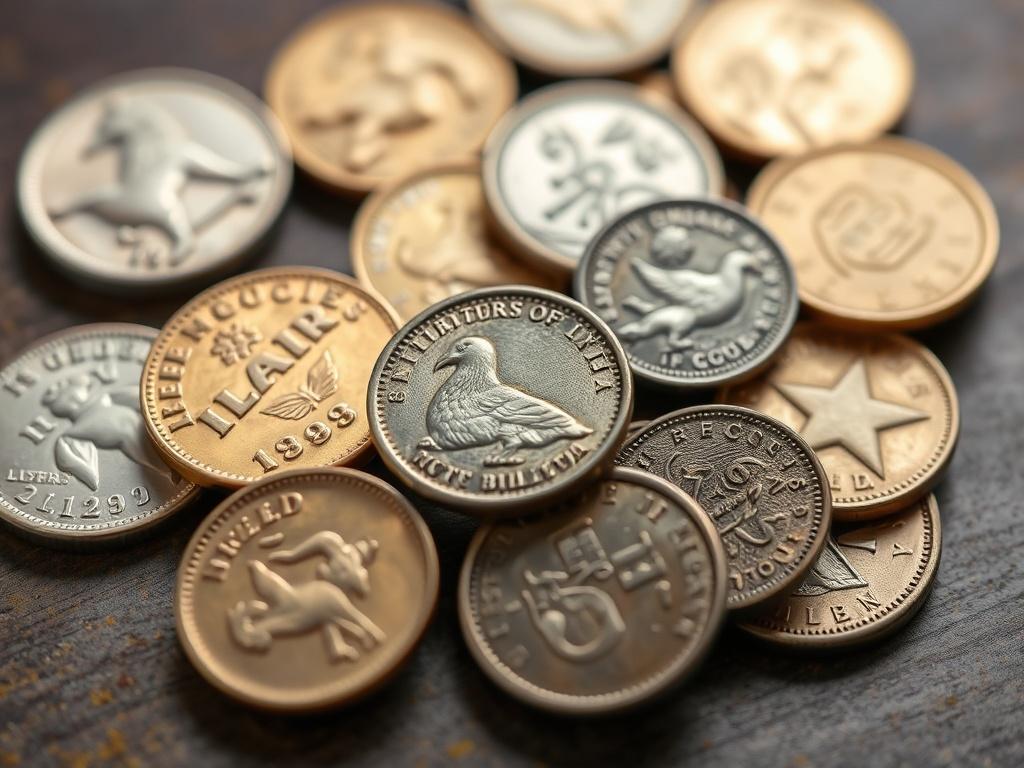
Assess condition and grading
Condition, or grade, drives much of a coin’s value. Two identical-dated coins can differ in price dramatically just because one shows wear and the other has sharp details. Grading ranges from heavily worn to perfectly preserved.
| Grade | Short Description | What to Look For |
|---|---|---|
| Good (G) | Heavily worn | Major design visible but flattened; date may be faint |
| Fine (F) | Moderate wear | Main features visible; some details lost |
| Extremely Fine (XF) | Light wear | High points show slight rubbing; most detail present |
| About Uncirculated (AU) | Very slight wear | Near-new luster with minimal contact marks |
| Mint State (MS) | No circulation wear | Full detail and luster; possible minor contact marks |
Grading can be subjective. Don’t try to assign a precise numeric grade on your first pass. Instead, categorize into one of the broad groups above. If you have a potentially valuable coin, consider getting it certified by an expert grading service such as PCGS or NGC for an authoritative result.
Signs of cleaning or damage to avoid
Cleaning ruins value. Bright, unnatural shine; hairline scratches running in the same direction; or a chalky surface are signs someone scrubbed the coin. Also watch for corrosion, holes, plugs, or bends. Once a coin is damaged or improperly cleaned, its collector value drops, often irreversibly.
Mint errors and varieties: where premiums hide
Not all value comes from age or metal. Errors and rare varieties often command premiums that far outstrip standard examples. Look for doubled dies, off-center strikes, clipped planchets, repunched mint marks, and mismatched dies. These are visible anomalies, usually obvious to a loupe.
If you spot an oddity, photograph both sides and search auction archives or error coin specialists. Many errors are valuable only after authentication, so document everything and consider third-party verification if the item looks significant.
Metal content and intrinsic value
Some old coins derive value simply from their metal. Silver, gold, and palladium coins have a melt value tied to spot prices. For these, knowing weight and purity matters.
| Type | Common Examples | How to Check |
|---|---|---|
| Silver | Pre-1965 U.S. dimes, quarters, half dollars; many world coins | Weigh, compare to catalog; magnet test (silver is non-magnetic) |
| Gold | Coins with face value but sold for gold content | Weigh, look up purity in references; avoid DIY acid tests |
| Base metal | Copper, nickel, bronze | Mostly numismatic value unless rare |
To estimate melt value: multiply the coin’s weight by its purity, then by the current metal spot price. But remember—many collectible coins are worth far more than their metal content, and melting a historically valuable coin is usually a bad idea.
Research market value
Price guides give a starting point, but realized prices—the amounts coins actually sell for—are the best indicators of market value. Here are dependable places to check:
- Red Book (A Guide Book of United States Coins) for U.S. issues.
- PCGS and NGC price guides and auction archives for graded coins.
- Heritage and Stack’s Bowers for high-end auction results.
- eBay completed listings for quick market snapshots (watch seller reputation).
- Specialist forums and collector groups for niche series and world issues.
Compare multiple sources. A price guide might list a range for a grade, but recent auction results reveal what buyers are actually paying right now.
Authentication and third-party grading
If a coin looks rare or valuable, third-party grading brings credibility and liquidity. Professional services verify authenticity, grade the coin, and encapsulate it in a tamper-evident holder. This reduces risk when selling at auction or to distant buyers.
Costs vary by value and service level. For low-value coins it rarely makes sense; for high-dollar pieces it often increases the final sale price enough to justify the fee. Use reputable firms and read their submission requirements carefully.
Buying, selling, and avoiding scams
When selling, get multiple opinions. A dealer might offer convenience but a lower price; an auction can fetch top dollar but adds fees. Online marketplaces expose you to many buyers but require clear photos and honest descriptions.
- Avoid offers that sound too good to be true.
- Be wary of pressure tactics or on-the-spot “expert” claims without documentation.
- Use secure payment methods and consider buyer/seller protections.
If someone insists a cleaned coin is worth a premium, ask for comparable auction results. If you’re buying, request clear images and a return policy. For high-value sales, escrow services or in-person transfers at a reputable coin shop are sensible safeguards.
Storage and care
Proper storage preserves value. Keep coins in inert holders—Mylar flips, archival-quality envelopes, or hard plastic capsules. Avoid PVC-containing plastics that can leach chemicals over time.
Control humidity and temperature. A small silica gel packet in your storage box helps, and a stable, moderate environment prevents corrosion. Handle coins by the edge and limit direct contact; skin oils accelerate toning and wear.
Quick checklist: How to check a coin’s value in 10 steps
- Examine the coin visually: note date, country, denomination, and mint mark.
- Photograph both sides under good light for records.
- Use a loupe to inspect details and possible errors.
- Weigh and measure with a digital scale and calipers.
- Compare measurements to reference specifications to confirm type.
- Assess condition using the broad grading categories.
- Search price guides and recent auction results for similar grade and type.
- Check for signs of cleaning, damage, or counterfeiting.
- If the coin appears rare or valuable, consider third-party authentication.
- Decide whether to sell to a dealer, consign to auction, or list online.
Resources and tools summary
| Resource | Best For | Notes |
|---|---|---|
| Red Book | U.S. coins identification and retail values | Annual print edition; good starting point |
| PCGS/NGC | Price guides, auction archives, grading | Useful for slabbed coins and high-end market data |
| Heritage, Stack’s Bowers | Realized prices at major auctions | Shows what serious collectors have paid |
| eBay Completed Listings | Quick market snapshot | Filter by sold items; check seller feedback |
| Local coin shops / clubs | Hands-on advice and quick appraisals | Get multiple opinions and build contacts |
When to consult an expert
If a coin matches a rarity listed in catalogs, displays an unusual error, or is a high-value metal piece, reach out to a reputable dealer or grading service. Experts can authenticate, grade, and sometimes point you to the best venues to sell. Even experienced hobbyists rely on specialists when stakes are high.
Conclusion
Checking the value of old coins blends observation, measurement, and research. Start by identifying the coin, then assess condition and metal content, consult trustworthy references and recent sales, and avoid cleaning or risky tests. Keep simple tools on hand, document what you find, and rely on professional grading for high-value items. With a methodical approach you’ll turn curiosity into confident decisions—whether you’re keeping a piece of history or turning it into cash.